
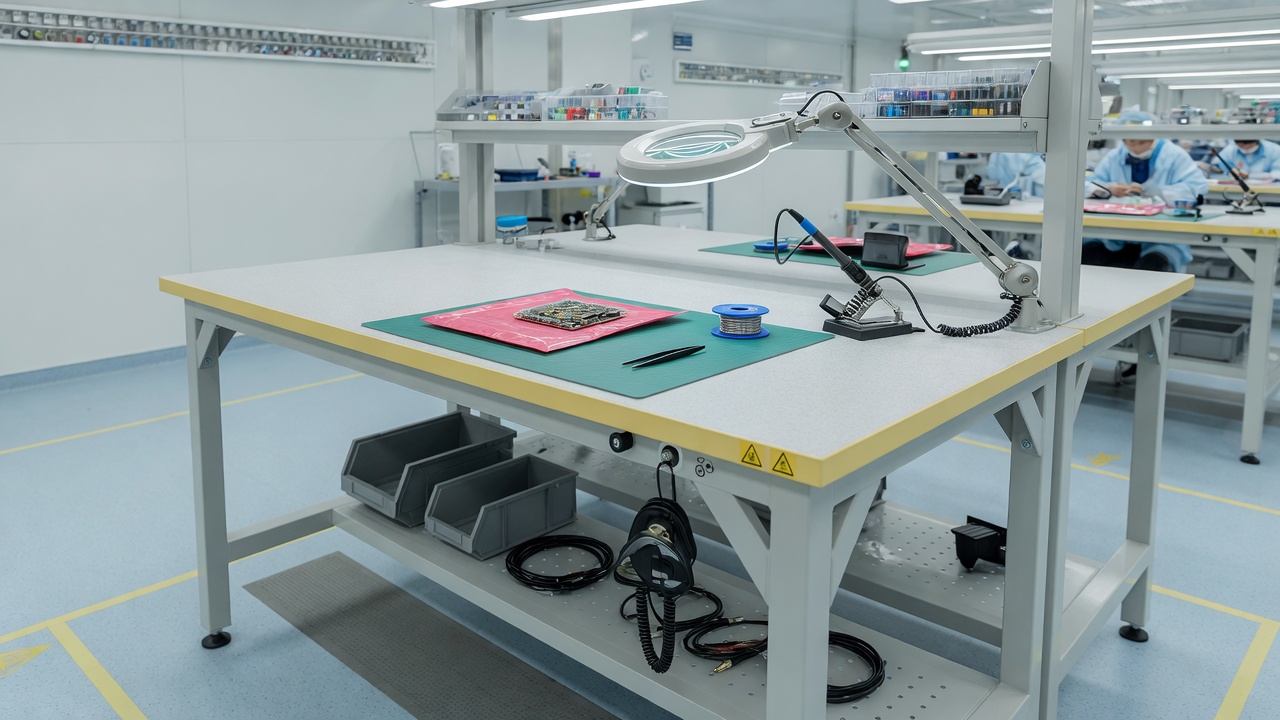
Buying Guides Industry-Specific Solutions
An ESD workbench (anti-static workbench) is not a fashion option for electronics cells. If static discharge can damage components, the work surface is part of the control system. This guide explains when to specify anti-static laminate from a British industrial manufacturer — and when a standard workbench is still the better buy.
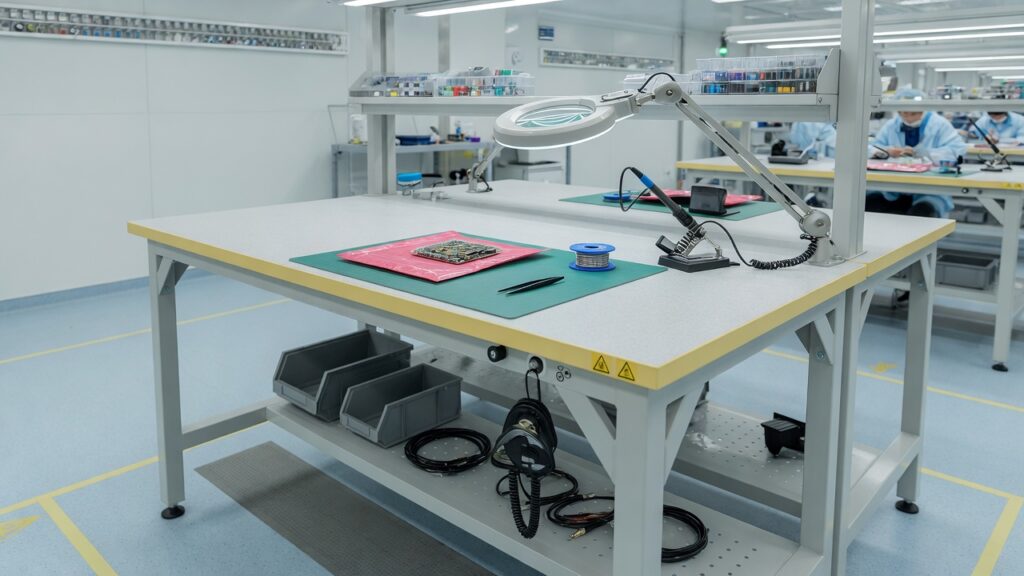
What the worktop does — and what it does not
Anti-static laminate provides a controlled surface for assembly. It is one layer of ESD practice. Full control still depends on flooring, footwear, wrist straps, ionisation where required, and your documented process. Buying an ESD top does not, by itself, make a cell compliant if the rest of the system is ignored.
When ESD is justified
- PCB assembly and rework
- Battery module or electronics sub-assembly
- Static-sensitive components with published handling rules
- Customer or quality system requirements that call out ESD benches
If none of those apply, a standard industrial top is usually more economical and easier to maintain.
Compare with standard British workbenches
| Need | Consider |
|---|---|
| Static-sensitive electronics | ESD anti-static workbench |
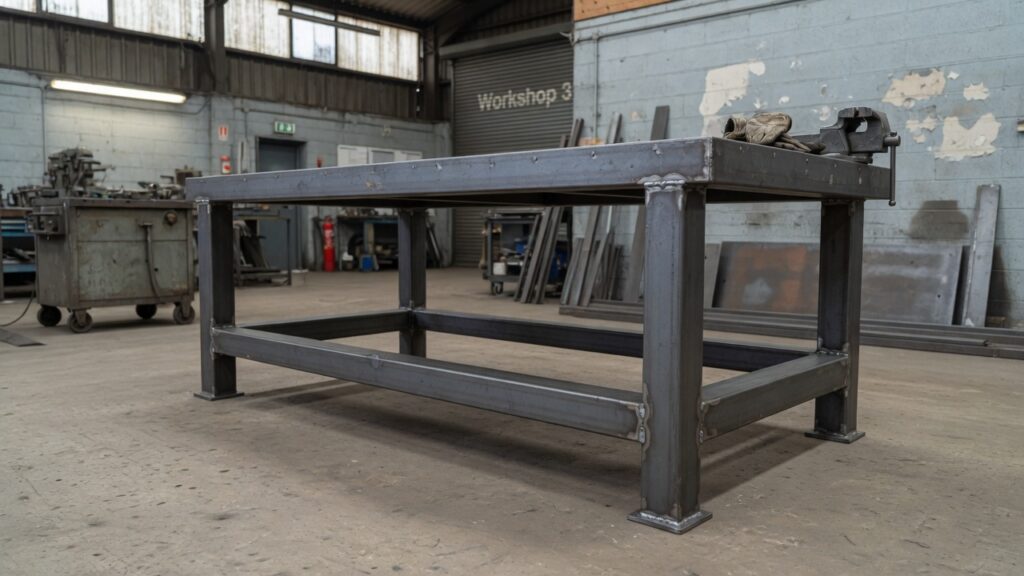
| General workshop, light industrial | Medium duty workbench 350kg |
| Heavy fixtures and production | Heavy duty workbench 1000kg |
| Hygienic / wash-down style environments | Stainless steel workbench |
Specification tips
- Confirm whether the quality system names ESD furniture explicitly.
- Size the bench for fixtures and test equipment, not only the board.
- Plan storage for tools so sharp edges do not damage the laminate unnecessarily.
- Train operators that the top is one control among several.
Browse anti-static workbenches and the full workbenches range. For process-specific questions, speak to us before ordering a multi-bay cell.
Why static control is measured in volts you never feel
- Below 100 volts — sensitive electronic devices can be damaged by discharges an operator never notices; component damage thresholds sit far below human perception.
- Around 3,000 volts — the approximate level at which a person begins to feel a static discharge, according to the ESD Association. If you felt a spark, the event was far above what damages a component.
- IEC 61340-5-1 — the international standard most quality systems reference for ESD control programmes, published by the International Electrotechnical Commission; it treats the worksurface as one element of a measured system.
ESD workbench FAQs
Does an anti-static top make my cell compliant on its own?
No. The worksurface is one control. Flooring, wrist straps, footwear, ionisation and documented procedures complete the system; standards such as IEC 61340-5-1 cover the whole programme.
Can I get an ESD top on a mobile bench?
Yes — anti-static laminate can be specified on mobile frames with braked castors where cells reconfigure often. Ask when configuring.
How do I clean an ESD laminate top?
Use cleaners approved for ESD worksurfaces; silicone-based polishes can insulate the surface and defeat the dissipative layer. A damp, lint-free cloth covers routine cleaning.
Is ESD laminate as tough as a standard top?
It handles normal assembly work well, but sharp tooling dragged across the surface shortens its life — use louvre panels and tool rails to keep sharp edges off the top.
Tool storage for electronics cells
- Mobile steel tool chest
- Triple tool cabinet, 450kg
- Single cupboard tool trolley
- Double-sided louvre panel trolley — bins and small parts
- Tool trolleys · Storage cabinets & lockers
Fitting out a teaching or test lab? See is your school lab ready for September?, and why a longer service life is the greenest choice.
ESD and industrial benches
Questions? Contact us or call 0161 688 6737.

