
Buying Guides
A flatbed trolley looks simple until you put it to work on a real warehouse floor. Load shape, how far you travel, and whether cartons can shift sideways all change which deck layout is safe and efficient. This guide is written for buyers specifying industrial flatbeds from a British manufacturer — not lightweight consumer carts.
What “flatbed” actually means in industrial use
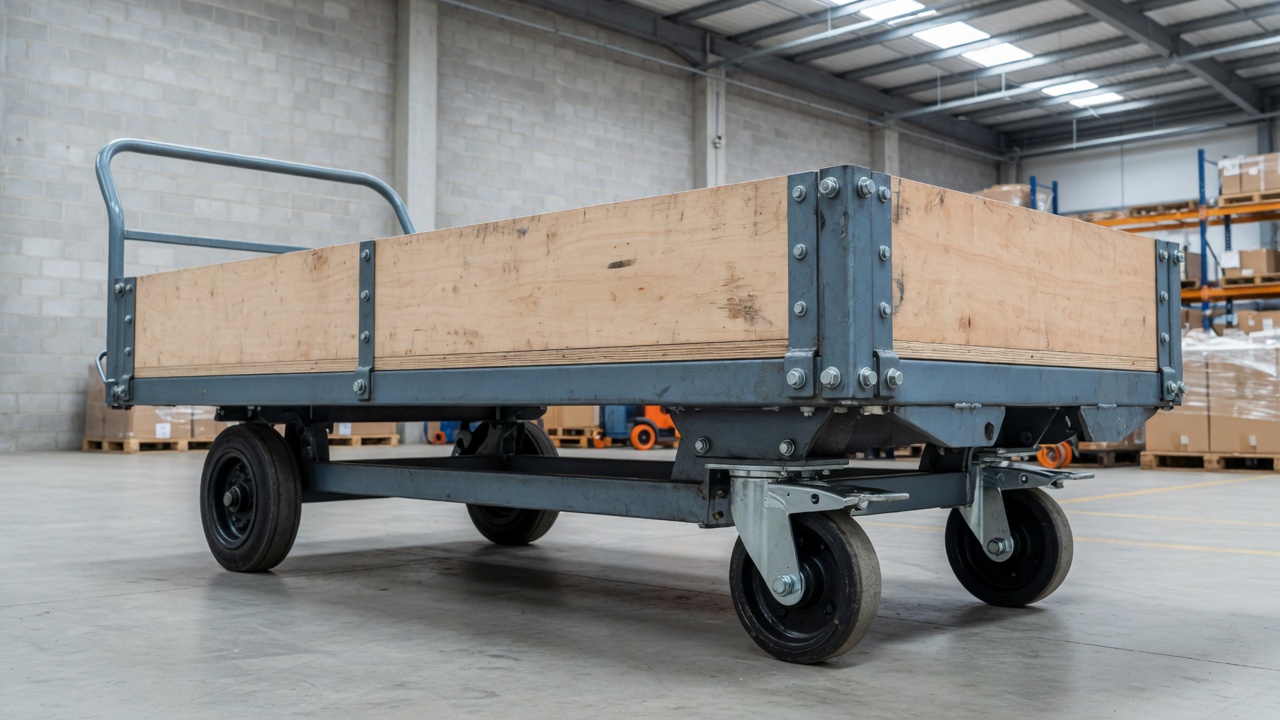
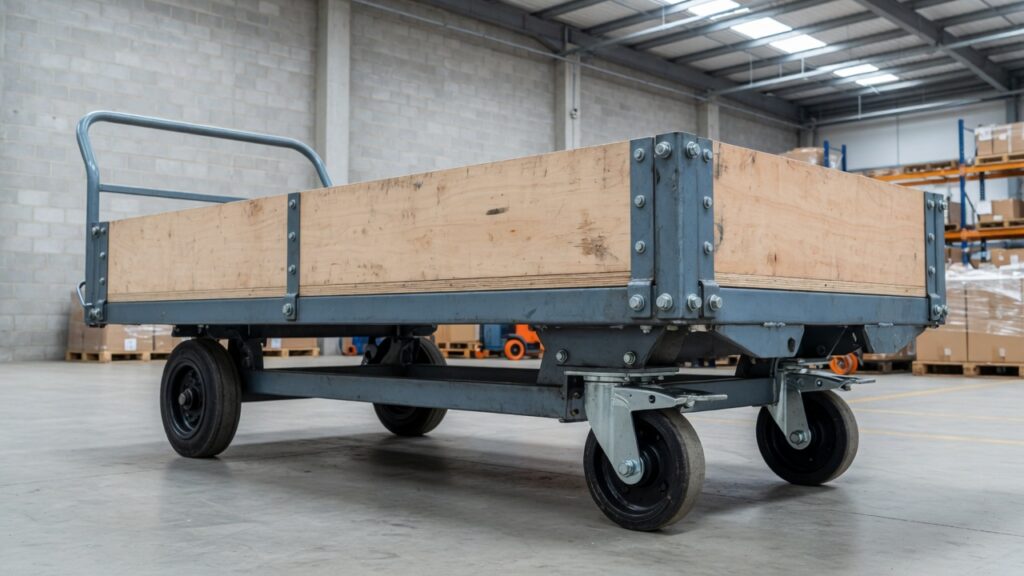
In factories and distribution, a flatbed is a low platform on castors used to move goods that are too bulky or awkward for a hand truck. At UK Workbenches & Trolleys our industrial flatbeds are specified around a 500kg uniformly distributed load (UDL) class, with steel box-section frames and plywood decks. That combination is intended for daily warehouse handling, not occasional DIY moves.
UDL means the rating assumes the load is spread across the deck. Concentrated point loads, tall unstable stacks, or hanging weight off one edge need a more careful assessment — contact us if your process is unusual.
Open, panelled or enclosed: decide by load behaviour
Open flatbed
An open flatbed trolley gives the freest access. It suits pallets, strapped cartons, stillages and anything you load with a forklift or from two sides. If loads are stable and travel is short, open decks keep packing and unpacking fast.
Panelled sides
A flatbed trolley with panels adds partial side containment. Use this when cartons or parts can slide during turns, or when operators push with one hand and need a physical edge. It is the most common compromise between access and control.
Enclosed panels
An enclosed panel flatbed raises containment for multi-item loads and less stable stacks. Choose this when product damage from fall-off is more expensive than a few seconds of extra loading care.
| Deck style | Best for | Trade-off |
|---|---|---|
| Open | Stable, bulky loads; forklift transfer | Less side support on corners |
| Panelled | Cartons and mixed picks | Slightly slower two-side loading |
| Enclosed | Loose multi-item moves | Highest containment, less open access |
Castors, brakes and floors
Castor choice is not cosmetic. Soft or damaged floors need different wheels from smooth resin. Braked castors help when loading on a slight slope or when the operator steps away. Fixed and swivel mixes track straighter on long runs; all-swivel is more manoeuvrable in tight packing cells.
- Brakes — prefer where the trolley acts as a temporary packing or pick station.
- Swivel/fixed mix — longer corridors between stores and lines.
- All swivel — tight aisles and frequent direction changes.
When a tray trolley is the better tool
If you need multi-level parts transit rather than a single platform, look at heavy duty tray trolleys or the wider trolleys and platform trucks range. Flatbeds win for bulk; tray trolleys win for kitting and multi-SKU moves.
British-made, not bolted flat-pack
Our trolleys are manufactured in Greater Manchester. Frames are industrial steel construction intended for continuous industrial use. Configure options online, or talk to us if you need help matching deck style to a live process.
The numbers that matter when you buy
- 500kg UDL — the working load class across our flatbed range, assuming the weight is spread evenly across the deck.
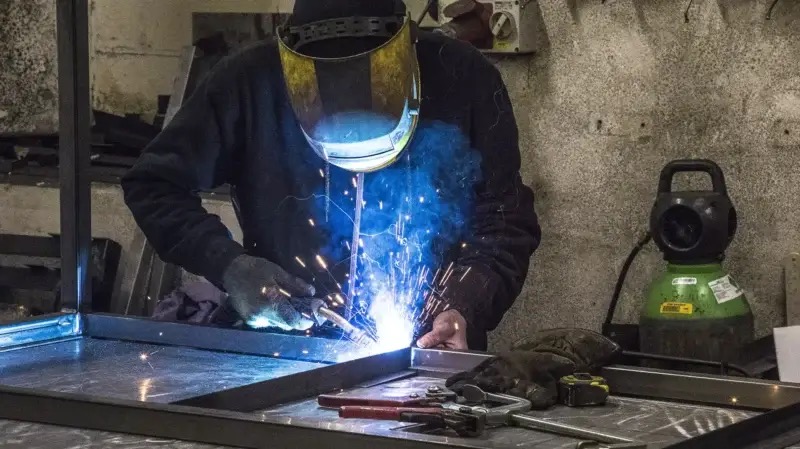
- Fully welded frames — no bolted joints to work loose under daily vibration on concrete floors.
- Over a third of workplace injuries — the HSE’s manual handling guidance attributes more than a third of workplace injuries to manual handling; wheeled load handling is one of the controls it recommends assessing.
For routes with slopes or long pushes, the HSE’s pushing and pulling guidance is the right risk-assessment starting point — it covers wheel condition, floor surfaces and push forces in plain terms.
Flatbed trolley FAQs
What does 500kg UDL actually allow?
A uniformly distributed load of 500kg spread across the deck — for example strapped cartons or a stillage. Point loads concentrated in one corner need a more conservative margin; ask us if your loads are unusual.
Are the trolleys supplied assembled?
Yes. Frames are fully welded in our UK factory, so the trolley arrives ready to work rather than as a flat-pack kit.
Which castors should I choose for a rough floor?
Rough or damaged concrete favours larger-diameter, softer-tread wheels; smooth resin floors can use harder wheels. Tell us the floor type and travel distance and we will recommend a setup.
Can I match a trolley to an existing packing bench?
Yes — deck sizes and options are configured at order. Many customers pair flatbeds with their packing benches so packed goods transfer at a consistent working height.
Related trolley ranges
- Multi-tier order picking trolley — multi-level picking rounds
- Heavy duty tray trolley, 3 steel shelves — heavier loads on steel shelves
- Medium duty tray trolley, plywood shelves
- Medium duty tray trolley, steel shelves
- Double-sided tool panel trolley — tools travelling with the job
- Double-sided louvre panel trolley — bins and small parts on the move
- Picking and tier trolleys · Platform trucks
Every frame above is welded and powder-coated in our own factory — see inside the conveyor oven, and how an EV start-up doubled output with modular workstations.
Shop flatbeds and related handling
- Open flatbed trolley 500kg
- Flatbed trolley with panels
- Enclosed panel flatbed
- All trolleys & platform trucks
Questions? Contact us or call 0161 688 6737.

